
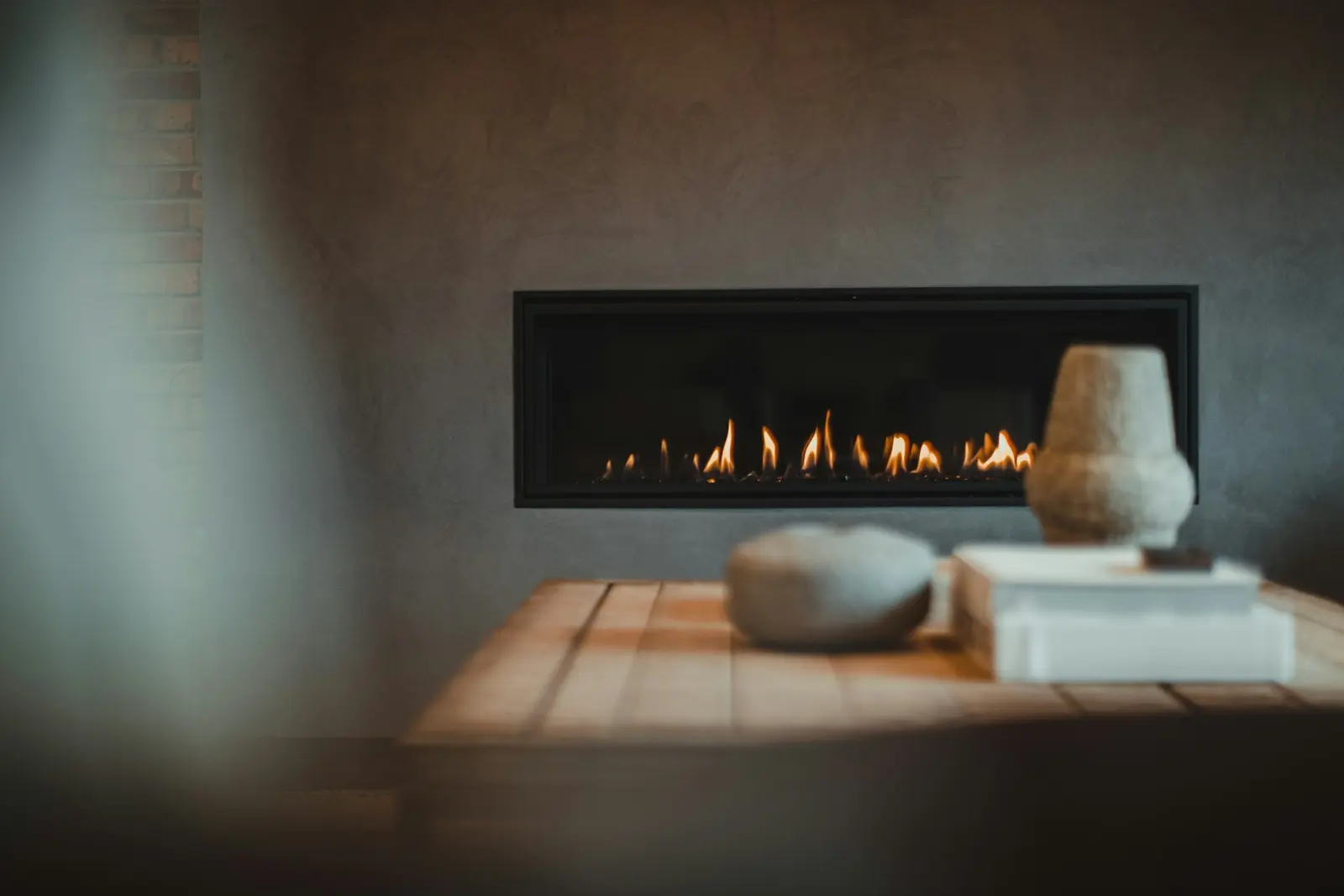
Why is my gas fireplace flame yellow, or leaving soot on the logs?
It depends on the kind of fireplace. Vented gas logs in an open fireplace are built to burn with a tall yellow flame, and a little dark carbon where the flame touches a log is expected. In a sealed glass-front or vent-free unit, soot on the logs, the glass or the wall above means the gas is not burning cleanly, often because a log has shifted into the flame or dust and lint are choking the burner's air openings after the summer. Southwest Gas says an appliance that leaves soot should be turned off and not used until a qualified contractor has serviced it.
Scottsdale Chimney · November 24, 2026
Normal yellow vs a real problem
Southwest Gas says a gas appliance in good order burns with a clear, steady blue flame, except decorative fireplaces and fire pits. Vented logs fall under that exception. Rasmussen, a gas log maker, says its pan-burner logs are designed for a smoky yellow flame that does make soot, so the damper must be open and the chimney drawing. A Desa vented log manual calls moderate carbon where flames touch the logs unavoidable, and heavier on propane.
Glass-front units are tuned tighter. An Innovative Hearth Products (IHP) manual shows a good flame as see-through yellow with a blue base and no soot at the tip; a bad one is dark orange and trails soot.
- Fine on vented logs: tall yellow flames and light carbon that brushes off
- Fine for a short time: orange flecks as airborne dust burns, or slight odor in a new unit's first hours
- A problem: soot inside the glass of a sealed unit, black streaks on the wall or mantel, soot drifting into the room
- A problem: dark, stringy flames, or yellow tips on the front burner of a vent-free set
Why it shows up here after the off-season
In Scottsdale and across the northeast Valley, most gas fireplaces sit off from spring until a cool evening in late November. Meanwhile monsoon dust storms push fine grit into houses and vent caps, pets shed, and spiders move into quiet burner compartments. A burner draws air through small openings to mix with the gas, and those clog easily.
Napoleon's troubleshooting guide for its BGD40 direct-vent fireplace lists a blocked air shutter as a cause of carbon on the glass and logs, and says to keep it free of lint. Desa's vent-free manual says blocked air holes create soot and asks owners to keep them clear of dust, lint and pet hair, cleaning them before each heating season.
Logs move, too. A vacuuming or a curious dog can nudge one into the flame path, and flame that hits ceramic cools and leaves carbon. Napoleon's first fix is to confirm the logs sit where the manual shows.
Other causes a technician looks for
- Gas pressure: Napoleon lists an over-fired or under-fired unit as a cause of carboning; checking it takes a gauge
- Air shutter: the IHP manual says it must never be set so the flame soots the glass or logs
- Fuel setup: natural gas and propane use different orifices and regulator settings, and IHP says a conversion kit belongs to a qualified service agency because mistakes can produce carbon monoxide; worth knowing in propane homes toward Cave Creek, Carefree and Rio Verde
- Venting: Rasmussen ties soot or odor in the room to a damper not fully open, an undersized flue or a blockage such as a bird nest, and says to fix it before using the logs again
- Regulator: a Desa vent-free chart lists too little air and a faulty regulator as causes of a yellow flame
What you can safely check yourself
Do these with the fireplace off and cool; Desa's vent-free manual says to wait at least thirty minutes, pilot off too.
- Compare the logs with the diagram in your owner's manual and return any piece that has slid
- On vented logs, confirm the damper is fully open, as Southwest Gas reminds customers
- Look for lint, pet hair and webs around the burner, and follow your manual on owner cleaning
- Brush or vacuum light carbon off vented logs; Rasmussen says log cleaners work no better and can discolor them
- Leave the air shutter, orifices and gas valve alone; those need gauges and the rating plate specs
When to shut it off and call
Keep the fireplace off if soot returns after the logs are reset, if soot reaches the wall or ceiling, or if a vent-free set shows yellow tips on its front burner, which Desa warns can mean more carbon monoxide. Southwest Gas's safety booklet notes an appliance sometimes leaves soot because it is producing carbon monoxide.
If a CO alarm sounds, the U.S. Consumer Product Safety Commission says to get outside, call 911, and stay out until responders allow you back. If you smell rotten eggs, leave and, from outside, call 911 and Southwest Gas at 877-860-6020, its 24-hour line. On propane, call 911 and your propane supplier.
Otherwise, our yearly gas fireplace service, typically $150 to $350 in Scottsdale, cleans the burner and air openings, resets the logs, checks gas pressure, and ends with a test burn and carbon monoxide check. A gas valve or control board runs $400 to $1,200. The diagnostic visit is free, and your exact price is written after the inspection.
FAQ
More answers
Is a yellow flame on gas logs dangerous?
On vented logs in an open fireplace with the damper open, a yellow flame is the intended look. On a sealed glass-front or vent-free fireplace, a mostly yellow, smoky flame is not normal. Southwest Gas says yellow flames can point to improper combustion and asks customers to call it right away at 877-860-6020.
Why is there soot on the wall above my fireplace?
With vented logs, black streaks above the opening usually mean some exhaust is rolling into the room instead of going up the chimney. A partly closed damper, a blocked flue or logs set so the flame smokes are the common reasons. Stop using it until the cause is found.
Can I just wipe the soot off the glass and keep using it?
You can clean cold glass, but on a sealed unit soot is a symptom. It comes back until the logs, burner or air shutter are corrected, and Southwest Gas advises not using a sooting appliance until it is serviced.
Do propane fireplaces soot more than natural gas?
A Desa vented log manual says carbon where flames touch the logs is especially common with propane. A light amount is normal; heavy soot on a propane set still points to log placement, air or pressure.
Keep reading
More from the blog
My gas fireplace pilot won't stay lit — why?Why a gas fireplace pilot lights then goes out, or stays on while the burner won't light — the usual parts, what you can check, and Scottsdale repair prices. Do gas fireplaces need to be cleaned and serviced?Gas fireplaces burn clean but still need a yearly check. What a gas fireplace service includes, why Valley dust matters, and what it costs in Scottsdale.
 Why is there a white film on my gas fireplace glass?Why the glass on a gas fireplace gets a cloudy white haze, how to clean it safely, and when the film or soot means something is wrong.

Book online
Pick a day. We bring the answers.
Free inspection in a 3-hour window: 8 to 11, 11 to 2, or 2 to 5. We call to confirm before we arrive.